When a research peptide is described as “99% pure,” that figure almost always comes from high-performance liquid chromatography (HPLC). Understanding what HPLC measures — and what it doesn’t — is the single most useful skill for evaluating a supplier’s quality claims.
What HPLC actually does
HPLC separates the components of a sample by pushing it, dissolved in a solvent, through a densely packed column under high pressure. Different molecules travel through the column at different speeds depending on how strongly they interact with the packing material. As each component leaves the column it passes a detector, producing a chromatogram: a series of peaks plotted against time.
For a peptide, the target molecule appears as one dominant peak. Impurities — truncated sequences, deletion products, residual reagents — show up as smaller peaks. Purity is calculated as the area of the main peak divided by the total area of all peaks, expressed as a percentage. A result of 99.0% means the target peptide accounts for 99% of the detected material by peak area.
What the number means — and its limits
A high HPLC purity figure tells you the sample is chromatographically clean. It does not, on its own, confirm the molecule’s identity — two different peptides can elute at similar times. That is why a rigorous testing programme pairs HPLC with mass spectrometry for identity confirmation. Purity answers “how clean?”; mass spec answers “is it the right molecule?”
Reading a purity result critically
- Look for the method. A credible certificate names the technique and the laboratory. Our batches are independently tested — see the published lab results.
- Check the detection wavelength. Peptides are typically read in the UV range (around 214 nm), where the peptide bond absorbs strongly.
- Beware of “purity” with no chromatogram. A percentage with no supporting report is a marketing claim, not a measurement.
Why third-party testing matters
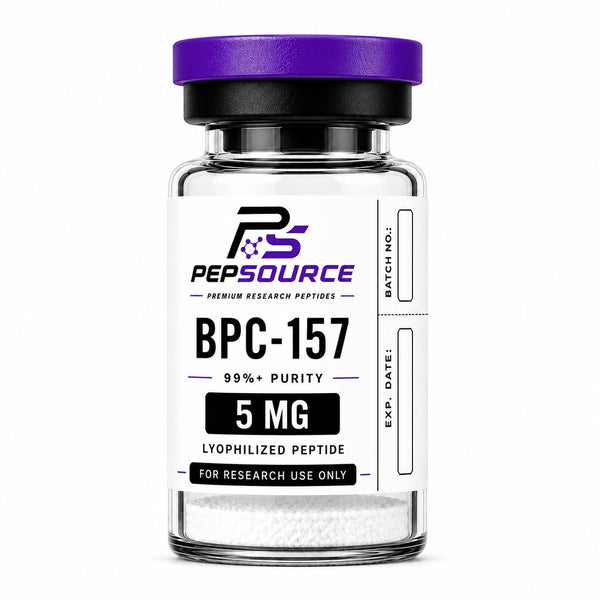
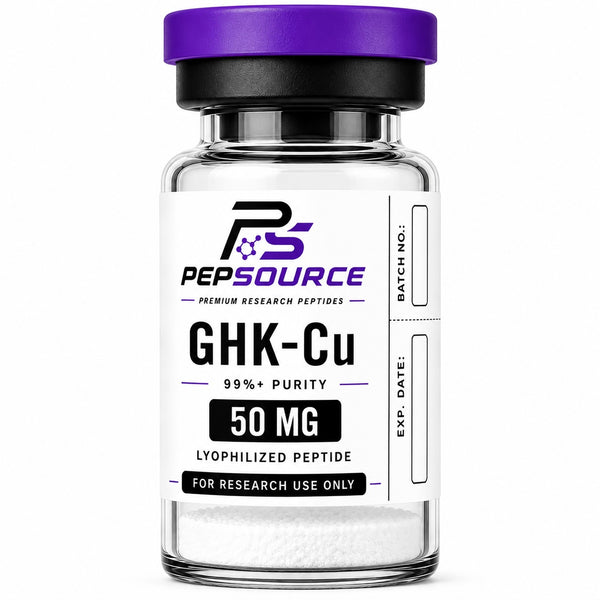
In-house numbers are easy to produce and hard to trust. Independent, blind testing removes the supplier’s incentive to flatter the result. You can confirm our published figures yourself: each batch page carries the laboratory’s public verification key. For a worked example, see the report for BPC-157 batch AS250910 alongside the BPC-157 research vials it was drawn from, or browse the full research peptide catalogue — including Semax, GHK-Cu and Retatrutide. All products are supplied strictly for laboratory research use only.
Next in this series: how to read a certificate of analysis line by line.